
The UNM-HP is a steady-state performance and optimization model of fully-thawed alkali liquid metals (K, Na, and Li) and water heat pipes. It calculates the vapor pressure losses in the various sections of the heat pipe (evaporator, adiabatic, and condenser), when vapor flow is dominated by friction rather than inertia forces (vapor Mach number less than 0.5). The calculated vapor pressure losses determine the temperature drop in the vapor core along the heat pipe. This temperature drop is added to the conduction temperature drops in the wall, liquid annulus, and the liquid saturated wick, both in the condenser and evaporator sections. The sum of these temperature drops gives the total temperature drop along the heat pipe. UNM-HP accounts for both the inertia and friction forces in the vapor flow, and the vapor remains saturated. This heat pipe model has been verified successfully using experimental data of the vapor temperature along a short sodium heat pipe (0.7 m) operated at different powers and Mach numbers up to 0.4 (Ivanovskii et al., 1982; see Figures 31a and 31b).
The UNM-HP model has been used successfully in the design and thermal analysis of the heat pipes-cooled nuclear reactors and heat rejection radiator panels of the HP-STMC and SAIRS power systems developed at UNM-ISNPS. In such designs, the local radial and axial vapor mass fluxes of working fluid in the heat pipe are calculated from the local energy balance, which accounts for the heat input to the evaporator section and the heat rejection along the condenser section. UNM-HP also accounts for the heat conduction in the C-C fins of the radiator heat pipes and calculates various heat pipes operation limits; namely, the viscous, sonic, capillary, entrainment, and incipient boiling, to determine the useful operation domain bound by these limits. Figures 32a and 32b compare the predictions of the UNM-HP model of the operation limits of the radiator heat pipes in SAIRS-C with those obtained using the widely used HTPIPE model, developed by Los Alamos National Laboratory (Woloshun et al., 1989).
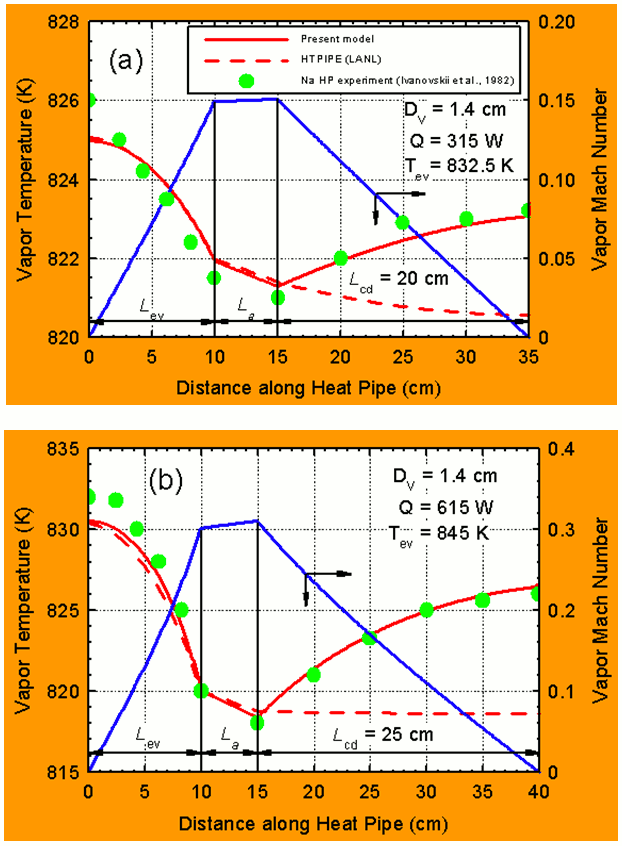
Figure 31. Comparison of UNM-HP predictions with measured vapor temperatures in a Sodium heat pipe at Mach numbers of 0.15 and 0.30 (Ivanovskii et al. 1982).
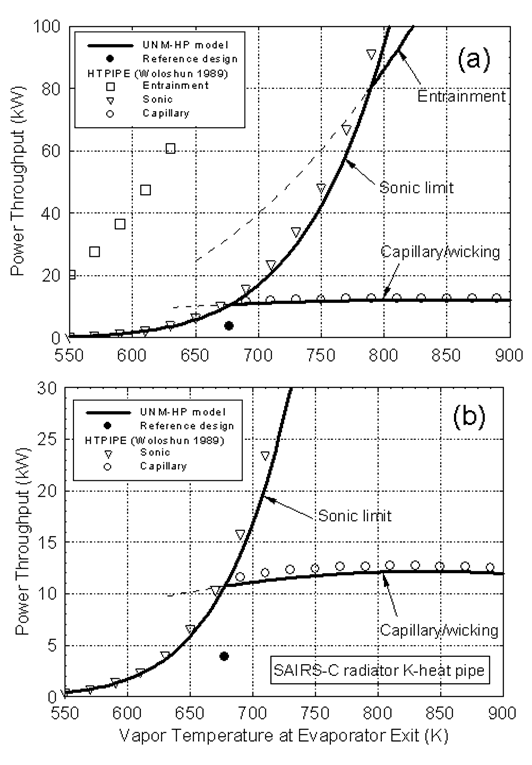
Figure 32. Operation limits of potassium heat pipe in SAIRS-C radiator.
Figures 32a and 32b shows predictions of the sonic and the capillary/wicking limits by the two models are in good agreement. Figure 33 shows the temperature contours of the SAIRS surfaces predicted by the model at nominal operation. The Scalable AMTEC Integrated Reactor Space Power Systems (SAIRS, Figure 26) developed at UNM-ISNPS all use D-shaped potassium heat pipes radiators with C-C armor and fins [32].
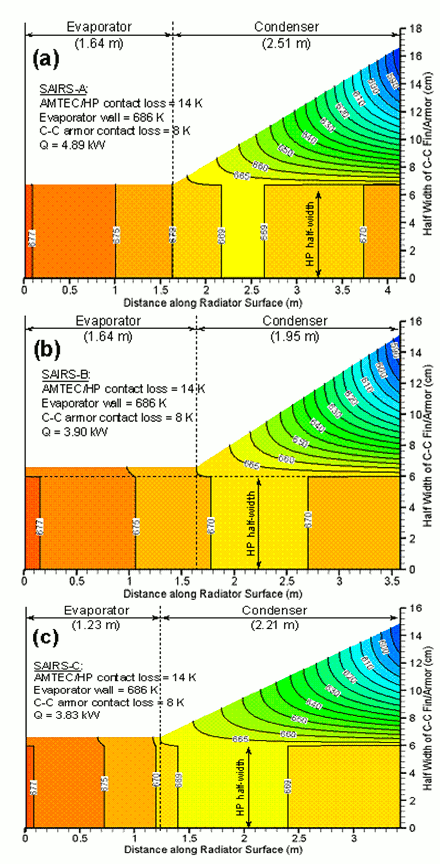
Figure 33. Surface temperature contours of SAIRS radiator C-C armor/fin.
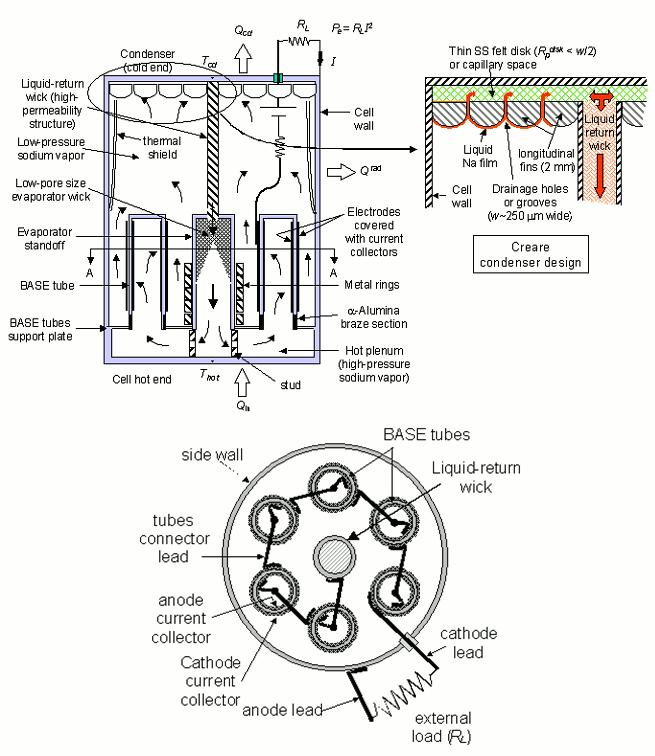
Figure 34. Cross-section views of a typical vapor anode AMTEC converter with 6 BASE tubes connected in series (not to scale).
Back to The Top